

ISLE Research
We Act on Our Perception
of How the World Works.
But What Happens When the World Changes Faster Than Our Assumptions?
Our assumptions shape what we see, how we interpret events, and the actions we take. In a rapidly changing world, those assumptions must be continually examined—and when they fall out of sync, must be reconstructed to maintain viability.
The Question Behind the Research
Why Do Some Systems Adapt While Others Get Stuck?
Lane Sloan began exploring that question in 1969 through an early framework he called the perceptual entity. Over time, that work developed into ISLE, short for Integrating Structure and Life Energy: a way of examining how beliefs and assumptions become structured, how those structures shape what a living system can perceive, and what may allow it to reconstruct when the world changes.
The ISLE Research Program
A Connected Body of Research.
Individuals, organizations and societies do not act directly on reality. They act through systems of governing assumptions that shape what they see and how they respond. ISLE research explores how those assumptions build capability, harden over time and must be reconstructed when the world moves beyond them. Start with the overview, then follow the research level by level.
Citing a paper? Find each paper’s DOI and SSRN listing in the reference table.
How ISLE Works
A Developmental Cycle of Meaning,
Constraint and Reconstruction
Individuals, organizations and societies build interpretive structures to make sense of their world. Reinforced by experience and success, those structures grow more capable, and more deeply embedded. ISLE argues that the same process that builds capability can eventually limit the ability to see a changing reality.
Core Concepts
Four Ideas at the Center of ISLE.
ISLE brings together four closely related ideas. Together, they help explain how individuals, organizations and societies make sense of the world, create enough coherence to move forward, and adapt when old assumptions no longer fit. Stability helps a system function. Reconstruction helps it remain viable when its world changes.
-
Stability
Structure
Individuals, organizations and societies develop connected beliefs and assumptions that help them understand the world.
-
Stability
Coherence
Those beliefs must fit together well enough to provide direction. They must also remain reasonably aligned with the surrounding environment.
-
Adaptation
Reconstruction
When established assumptions no longer fit, adaptation may depend on the capacity to reconsider and rebuild the structures guiding perception and action.
Life Energy
ISLE explores the role of life energy within living systems. The construct is approached differently in Lane’s formal theoretical work and his personal writing, and each use should be considered on its own terms.
Why life energy means different things in ISLE and in What Is This Thing Called Life?The Architecture
Built for a World
Whose Foundations
Are Shifting.
Artificial intelligence and biotechnology are changing the assumptions people and organizations rely on faster than they can revise them. Lane explains why ISLE was built for exactly that kind of world, and how its architecture took shape. The map below shows that architecture across individuals, organizations and societies, and the research behind each.
The Overall Architecture
One Developmental Architecture. Three Domains. And the Work That Connects Them.
The ISLE framework extends across three primary domains—Individual, Organization, and Society. Each examines a different expression of the same underlying developmental architecture, while the connections among them reveal how change at one level can shape and constrain the others.
But the architecture extends beyond the research papers themselves. It provides the intellectual foundation connecting Lane Sloan’s work on individual development, organizational viability, leadership, business growth, societal change, and the broader questions of how we understand and live our lives.
Select Individual, Organization, or Society to explore the work within each domain. Select the center to see how the domains connect and how the larger body of work fits together.
The Overall Architecture
One Developmental Architecture. Three Domains. And the Work That Connects Them.
And the Work That Connects Them.And the Work That Connects Them.
Every paper in this program extends the same underlying framework, ISLE, into a different domain. Select Individual, Organization or Social to see the questions each one explores, how its research is built and the papers behind it. Select the center to explore research that crosses all three.
Select a circle, or the center, to explore
Theoretical Monograph
The Perceptual Enterprise
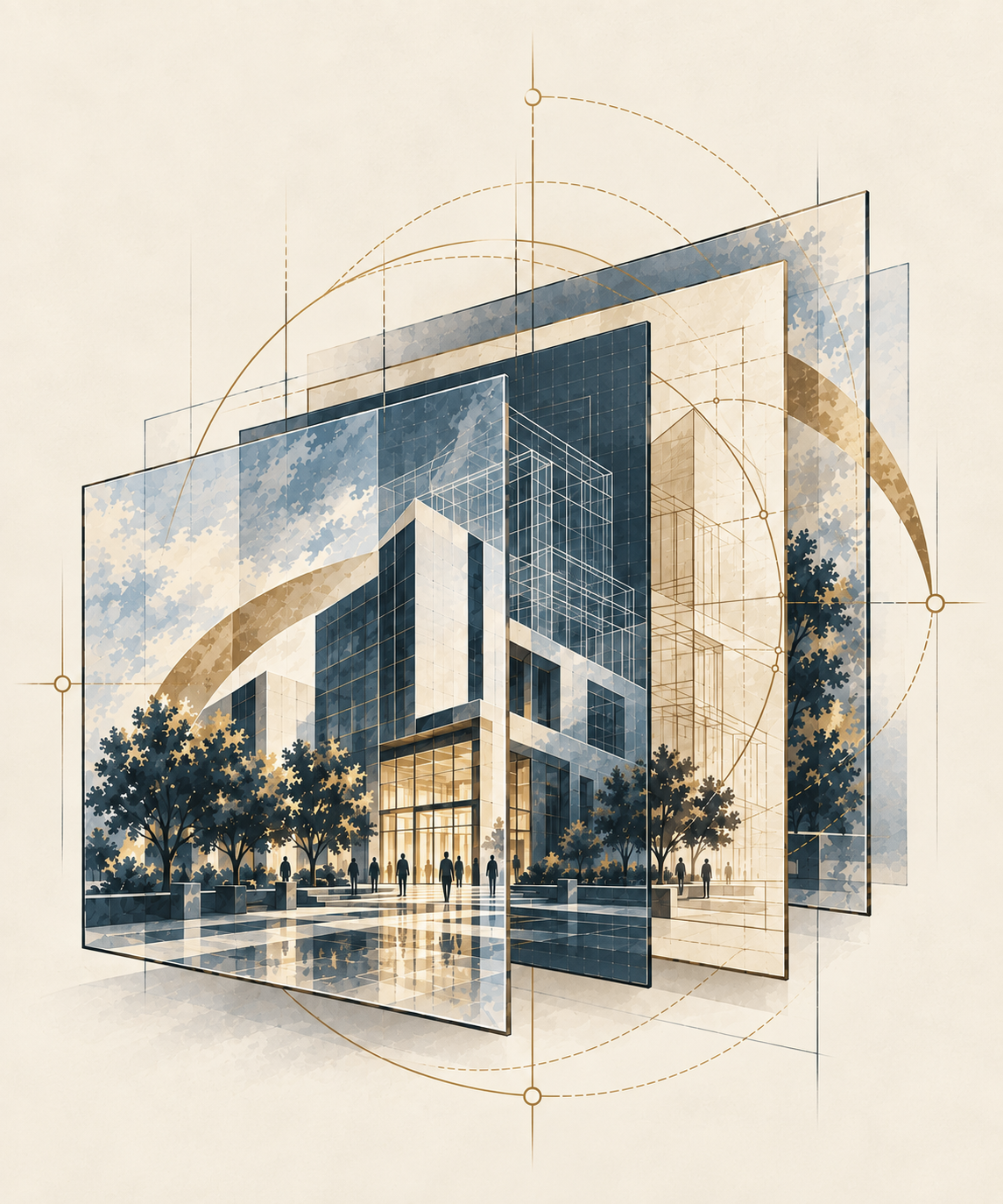
Lane’s theoretical monograph presents the enterprise as a perceptual entity: an organization does not respond directly to the world as it is, but to the world it is capable of perceiving, interpreting and making meaningful.
It examines how organizational meaning is formed, how success reinforces established assumptions, and what happens when those assumptions no longer fit a changing environment.
Looking for the managerial book?
More Ways to Explore
You Don't Need to Begin
With the Theory.
ISLE Research is here for visitors who want the complete theoretical foundation. Lane's other work offers more practical and narrative ways into many of the same questions.

Develop Yourself
Explore purpose, self-leadership, adaptation and personal development through practitioner articles and books.
Grow Your Company
Explore how leadership, organization and processes must change as a company moves through different stages of growth.
The Perceptual Enterprise
Explore how perception, assumptions, strategy, leadership and adaptation interact inside an enterprise.